The Healthiest Thing I Ever Did for My Skin Was Stopping
For a long time, skincare has been built around the idea that more is better.
More products. More actives. More exfoliation. More correction.
If skin becomes dry, congested, reactive, textured or uneven, the instinct is often to add something else.
Another serum. Another acid. Another treatment.
But sometimes, skin does not need more intervention.
Sometimes it needs less.
When I developed perioral dermatitis, I had to completely rethink the way I approached my own skin.
I stopped trying to correct every change.
I stopped constantly adding new products.
I stopped exfoliating and resurfacing simply because I felt I should be doing something.
And I started asking a much simpler question:
What does my skin actually need?
Doing less does not mean doing nothing
There is an important distinction here.
Leaving skin alone does not mean neglecting it.
For me, stripping everything back meant creating a very simple routine around the things my skin genuinely needed.
I used a cleanser that cleaned my skin without leaving it feeling tight or stripped.
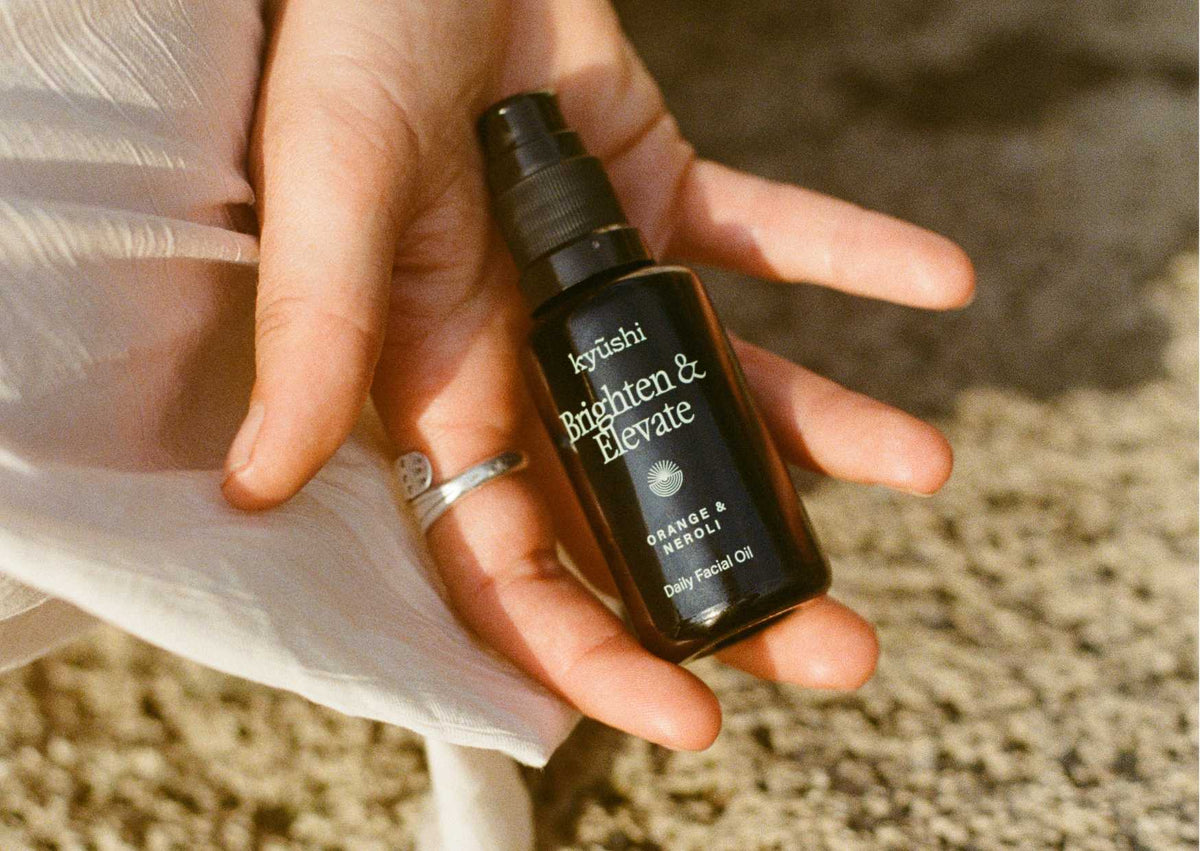
I used an oil that my skin understood and could work with.
And I used a moisturiser that helped lock everything in, while still delivering supportive skincare ingredients.
Then I left my skin alone enough to do what skin is designed to do.
That became the foundation of how I think about skincare now, and a huge part of the philosophy behind Kyūshi.
Skin is not meant to look the same every day
One of the things I think we have lost slightly in modern skincare is an acceptance that skin changes.
It responds to our hormones, our sleep, our stress levels, the weather, travel, our environment and what is happening elsewhere in the body.
There will be days when it is drier.
Days when it feels more congested.
Days when you notice more texture, pigmentation or the beginnings of a breakout.
That does not automatically mean something has gone wrong.
And it certainly does not always mean you need to reach for another active.
Sometimes, constantly reacting to every small change is the very thing that keeps the skin in a cycle of sensitivity.
Healthy skin is not perfect skin
Healthy skin can still have pores.
It can have texture.
It can have pigmentation, movement lines and the occasional blemish.
The goal, for me, is not to create skin that looks permanently filtered.
It is to support skin so that it can function properly.
That means protecting the barrier, replenishing what it needs and avoiding unnecessary disruption.
Consistency often does far more for skin than constantly chasing the next solution.
Skin does not exist in isolation
The other part of my own journey was realising that I could not only look at what I was putting on my face.
I also needed to look at the rest of my body.
My stress levels.
My sleep.
My environment.
What I was eating.
What was happening internally.
Skincare can be incredibly supportive, but skin is still part of a much bigger system.
That is why my approach has always become broader than simply asking, “What product should I use?”
Sometimes the question is also, “What is my skin trying to tell me?”
The routine I came back to
Even now, I still believe in keeping things relatively simple.
A cleanser that does not strip.
An oil that nourishes and supports.
A moisturiser when the skin needs that extra layer of protection and comfort.
Then consistency.
There can absolutely be a place for targeted ingredients and treatments, but I do not believe skin needs to be constantly pushed, resurfaced or corrected in order to be healthy.
Sometimes the healthiest thing you can do is give skin what it needs, and then get out of its way.